The real price of AI in marketing: why cost uncertainty is a governance risk
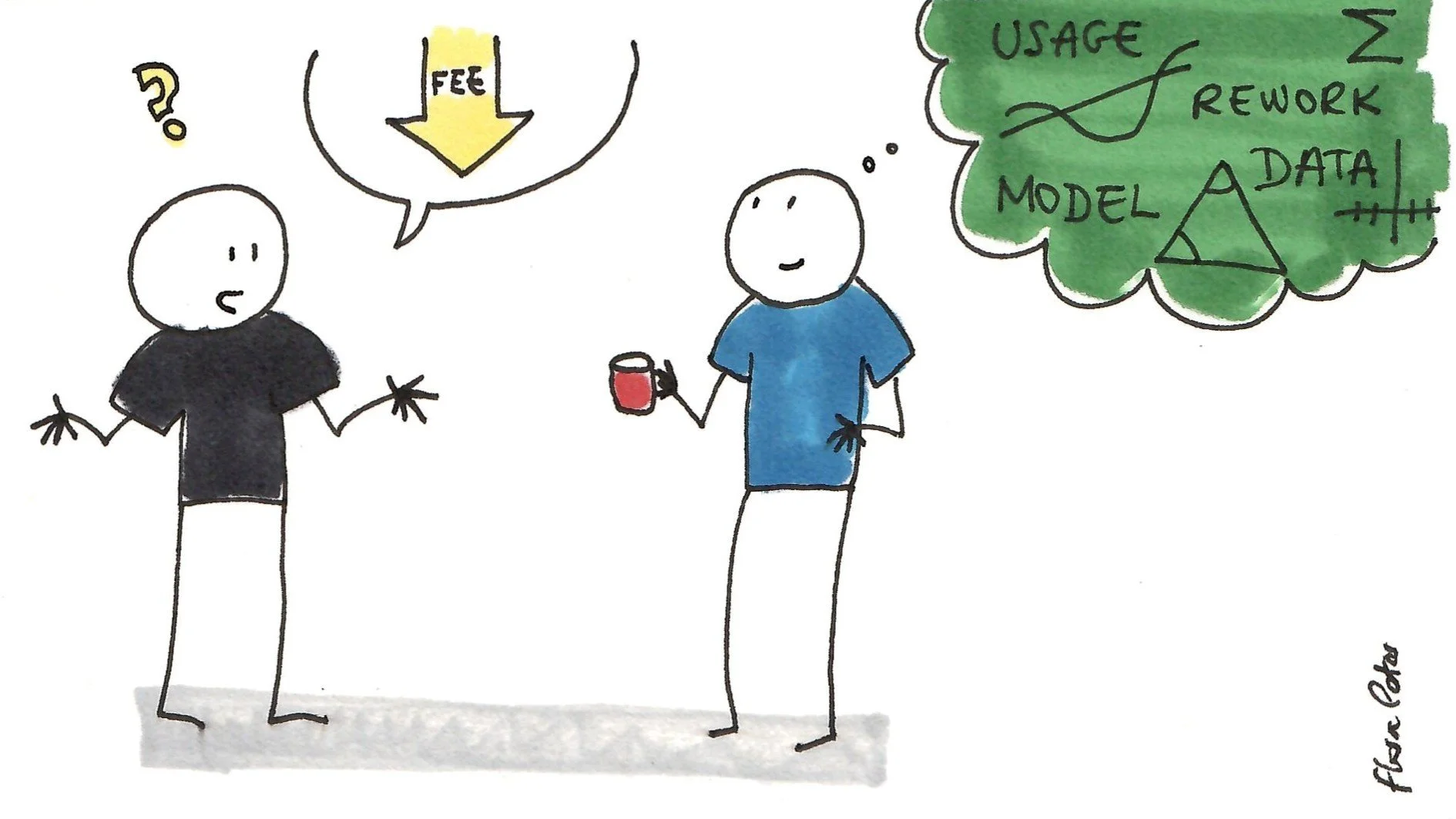
You have probably already had this conversation with a client:
“AI is helping your team work faster. Why hasn’t your fee gone down?”
Or perhaps this one internally:
“We use AI everywhere now. Why are our margins not improving?”
The answer may be uncomfortable. AI can reduce production time while making the cost of delivery harder to see.
Usage charges, model selection, automation runs, data processing, senior review, rework and supplier changes can all affect the economics of an AI-enabled service. If the agency does not measure and govern those variables, productivity gains may disappear into unbilled work and hidden operating costs.
For every material AI-enabled workflow, the leadership team should be able to answer five questions:
Who approved it?
What should it cost under normal usage?
What is the maximum acceptable cost?
Which client, campaign or deliverable bears the cost?
Who can stop or change it when the assumptions no longer hold?
If the answers are unclear, the agency has an invisible margin risk.
AI is becoming a moving budget line
AI is becoming part of the operating model of marketing teams and agencies.
Gartner’s 2026 CMO Spend Survey found that the marketing leaders surveyed allocated an average of 15.3% of their marketing budgets to AI initiatives. Only 30% reported mature or fully developed AI-readiness capabilities. Among organisations described as AI-ready, the share allocated to AI rose to 21.3%.
The survey covered 401 marketing leaders, primarily from larger organisations in North America, the UK and Europe. These figures are therefore better understood as a market signal than as an agency benchmark.
The gap between investment and readiness can appear in pricing, margin analysis, client contracts, procurement, data controls, workflow ownership, quality assurance and supplier management.
AI can help an agency deliver more value. Unmanaged AI can also make the cost of delivery harder to see
The cost of delivery is changing
For many years, a digital agency could forecast much of its software spending from the number of seats and subscriptions it held.
That model was never completely fixed. Cloud services, storage, advertising and automation costs were already variable. But seat-based tools created a relatively stable baseline.
AI adds more variables:
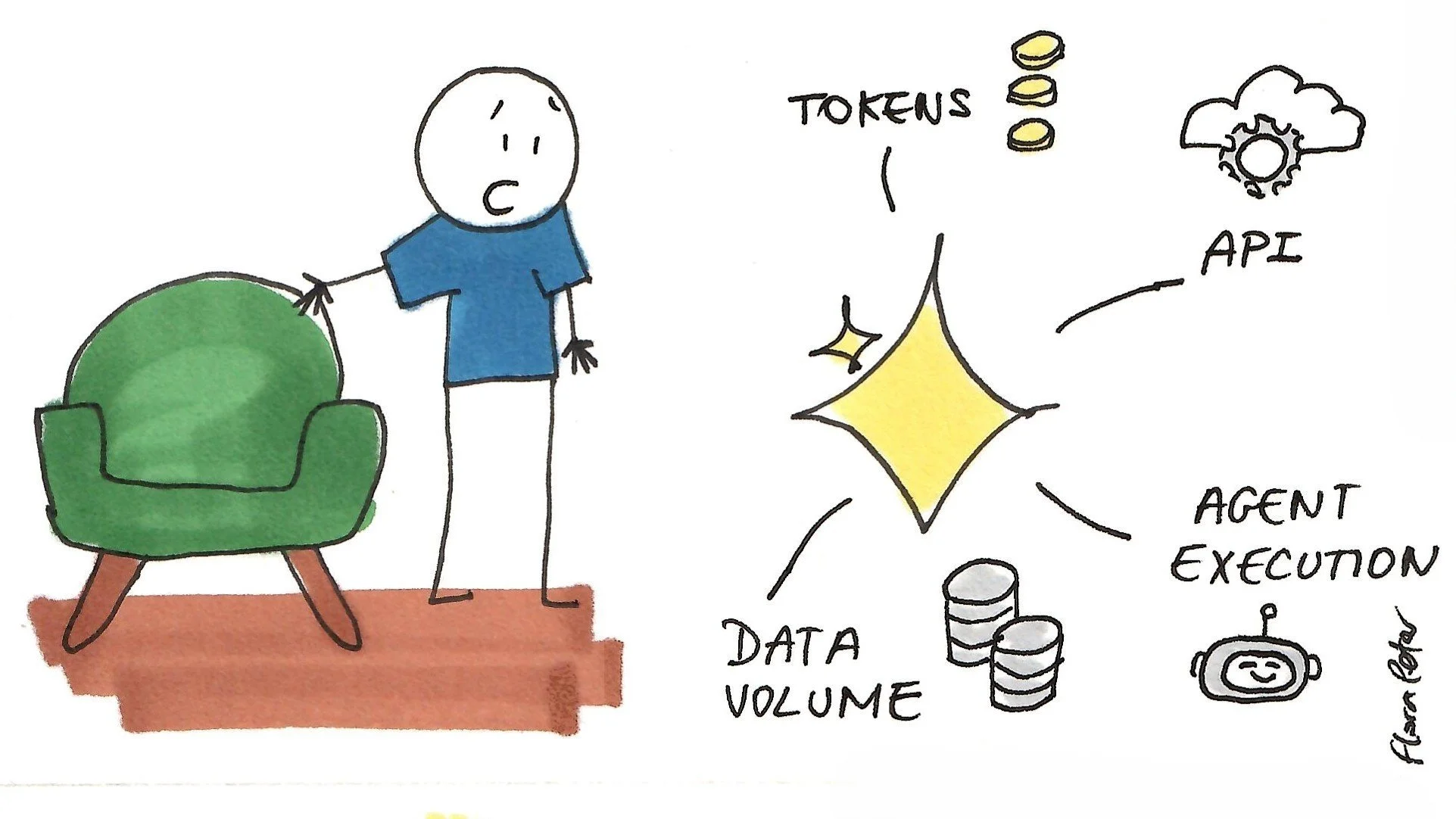
usage and token volume;
API calls and automation runs;
agent executions;
data volume;
premium models and higher-capacity plans;
programmatic access;
overage charges.
The market is creating a hybrid model in which a seat may be only the starting point.
A tool can combine a predictable subscription fee with usage that varies, a separate API bill, additional platform costs and human review that never appears on the technology invoice.
That last category is easy to miss. Faster AI output can create more senior review, fact-checking and corrections. If those hours are not tracked, the agency may report improved productivity while absorbing additional delivery work.
A realistic agency example
Imagine a 20-person agency using AI for three activities:
generating first drafts of campaign content;
producing weekly client reports;
creating and evaluating multiple advertising variants.
The first activity may be mostly included in existing team subscriptions.
The second may require API access, data processing and human review.
The third may involve batch generation, automated evaluation and several model calls per variant.
The agency sees three software invoices. But the relevant management question is different:
What does each workflow cost?
How much of that cost belongs to each client?
Which workflow consumes the most human review?
What happens during a peak campaign period?
What happens if a model becomes unavailable or its limits change?
Does the commercial agreement allow the agency to recover additional cost?
Without that analysis, the agency may believe that it is earning more from AI-enabled work because production time has fallen. In reality, it may be absorbing new costs and taking on additional operational risk without changing its pricing model.
Why agents increase exposure
Manual AI use and automated AI use create different risks.
When a strategist asks an AI tool for headline ideas, a person is usually present at the point of execution. When an agent is connected to a workflow, it may run on a schedule, process large volumes, call several tools, repeat a task after an error or generate multiple versions.
The spending authority may be created by configuration rather than by a conscious purchase decision.
An agent with access to a model, automation platform or client data needs operational boundaries: limited authority, monitoring and a reliable way to stop it.
Before the workflow goes live, define its expected cost, maximum usage, approved models, budget, alert threshold and stop threshold. Assign one person the authority to pause it.
Where a provider cannot enforce a hard budget, use the strongest available combination of usage alerts, rate limits, separate API keys, project-level budgets, logging and a manual stop procedure.
An alert is not the same as a spending cap. The agency should know which controls prevent excess usage and which merely reveal it after the fact.
The problem is not only the price
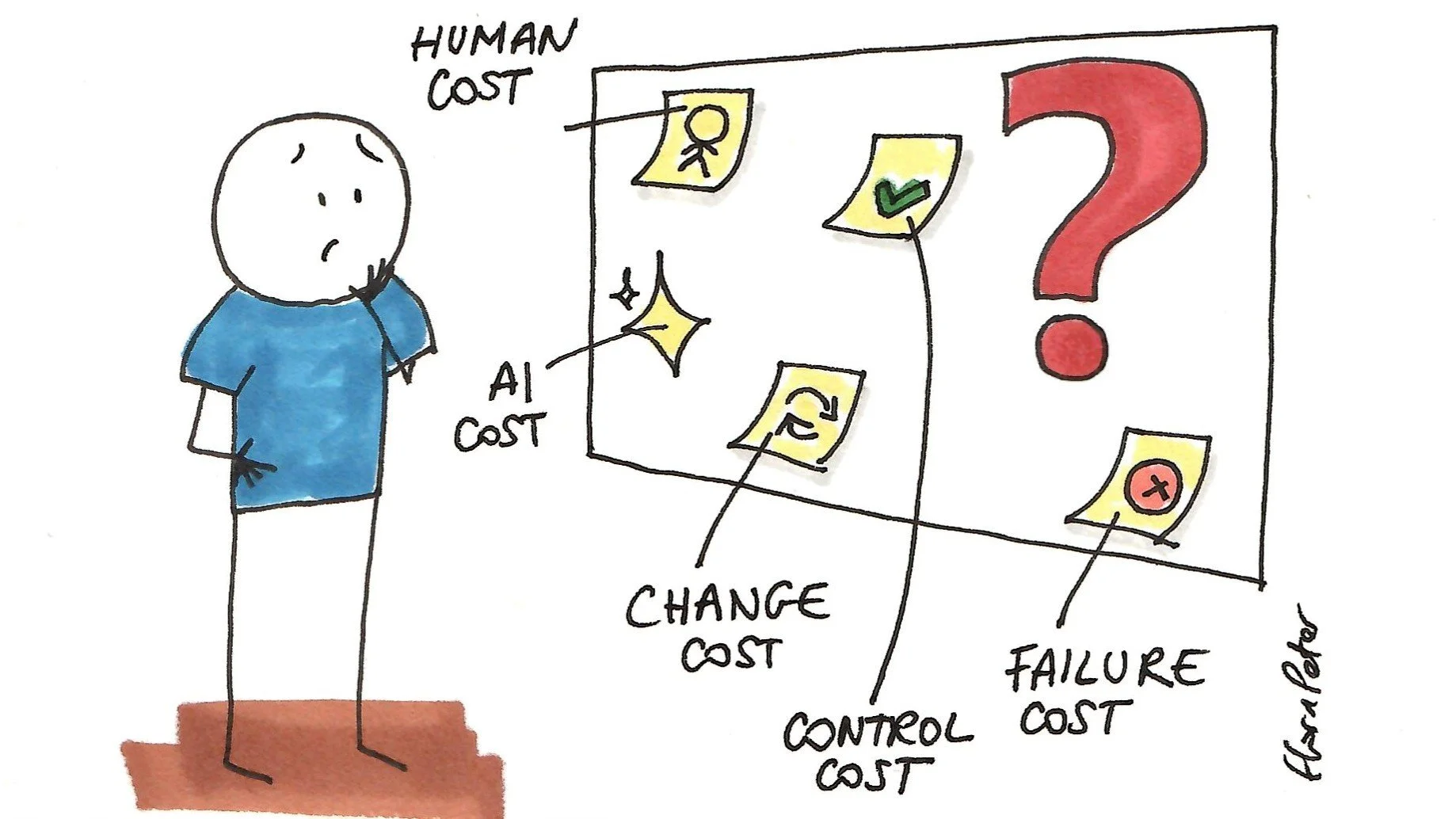
The technology invoice is only one component of an AI-enabled service.
A practical model is:
Total workflow cost = provider cost + platform cost + human cost + control cost + failure cost + change cost
Provider cost
Subscriptions, tokens, credits, overages, premium models and higher-capacity tiers.
Platform cost
Automation tools, hosting, connectors, storage, databases, monitoring and data transfer.
Human cost
Workflow design, preparation, supervision, fact-checking, editing, client communication and approval.
Control cost
Testing, documentation, training, security review, privacy review, legal input, access management and record keeping.
Failure cost
Rework, correction, missed deadlines, incorrect publication, takedown, client complaints and remediation.
Change cost
Adapting to a new model, migrating a workflow, replacing a connector, retraining users or rebuilding an automation.
Consider a client-reporting workflow that generates €12 of API usage per report. It also requires 90 minutes of review, 30 minutes of corrections, a quality checklist, client-facing approval and occasional troubleshooting.
The economic cost is not €12. The fully loaded cost may exceed €100 once internal capacity, supervision and expected rework are included. The precise figure depends on the agency’s costs and workflow, but the principle is stable: the technology invoice does not represent the cost of reliable delivery.
Not every AI cost needs to appear as a separate client charge. The agency does need to distinguish between general overhead, capability investment, reusable intellectual property, client-specific usage and exceptional volume.
That distinction supports better pricing and margin decisions even when the client receives one consolidated fee.
Agencies are absorbing the cost
In research conducted with the 4As, Forrester found that 75% of surveyed marketing agencies were bearing the cost of generative-AI capabilities themselves rather than passing those costs on to clients. Forrester reported that this represented an 83% increase compared with the previous year.
The research also highlights the productivity potential. Some agencies reported speed-to-market improvements of 80% or more, while others reduced production costs by 40% to 50%.
This creates a difficult commercial situation:
the agency invests in tools, training and workflow design;
the team produces work faster;
clients may expect fees to fall;
AI-related costs remain on the agency’s books;
quality and governance work remain partly invisible.
The 75% figure show that many agencies are carrying AI capability costs without an explicit client-side remuneration mechanism.
The CEO should be able to answer these questions:
Are we using AI to create margin, or simply to protect revenue?
Are we charging for the capability we have built?
Are we measuring savings as well as costs?
Do our contracts reflect usage, volume and revision assumptions?
Can we explain the value of our human expertise combined with AI?
Start with workflows, not tools
A tool inventory is necessary, but it is not sufficient.
The same platform might be used to brainstorm public campaign ideas, analyse confidential client data, generate advertising variants or make changes in a marketing platform. Those uses have different cost profiles, data sensitivities, levels of autonomy, quality requirements and failure costs.
For each significant workflow, record:
purpose and accountable owner;
supplier, model and data categories;
level of automation and expected usage;
fixed and variable costs;
clients or campaigns affected;
human review points and quality criteria;
privacy and security controls;
fallback process and review date.
A workflow-based view also supports responsible AI practices. For example, an agency should identify where human oversight is required, how personal or confidential data moves through the process, and whether the workflow creates client-facing content or decisions requiring additional transparency.
These practices are consistent with the AI-literacy and risk-management principles reflected in the EU AI Act, including Article 4.
A five-step control plan
You do not need a large governance department to begin. A small agency can implement the basics with a spreadsheet, a named owner and a regular review.
1. Map the workflows
Identify material AI use across delivery, including content, SEO, advertising, reporting, analytics, design, project management and internal operations.
Prioritise workflows connected to active client delivery, confidential information, public-facing content or automated actions. Include tools paid for by individuals and experimental workflows that may already process client information.
2. Classify the cost
Classify each workflow as fixed, variable, semi-variable, usage-limited or subject to overages.
A monthly seat is relatively fixed. A token or credit charge is variable. A plan with included usage and paid overages is semi-variable.
Variable costs can often be modelled once usage data exists. They should not be treated as fixed by default.
3. Assign one accountable owner
Every material variable-cost workflow needs one named owner.
That person should understand what the workflow does, what data it uses, what it costs, what quality standard applies, what its stop threshold is and who approves changes.
In a small agency, one person may hold several responsibilities. Accountability still needs to be explicit.
4. Set financial and operational thresholds
Before a workflow goes live, define:
expected cost per run;
monthly or peak-period budget;
alert and stop thresholds;
maximum iterations;
approved models and data;
review requirements.
Do not wait for an unexpected invoice to decide what “too much” means.
5. Review cost, quality and margin together
Review provider and platform costs alongside human time, correction rates, usage volume, quality incidents, gross margin and fallback readiness.
A workflow that is cheap but unreliable may cost more than one that is expensive but consistently produces usable work.
Protect the client relationship
Your clients need a clear understanding of the assumptions behind the service.
Depending on the offer, clarify the expected deliverables, volume, revision rounds, turnaround time, human review, client approval responsibilities and exceptional requests.
Possible commercial models include:
| Model | Suitable when | Protection to include |
|---|---|---|
| Fixed price per deliverable | Output and assumptions are clear | Volume, scope and revision limits |
| Monthly retainer | Support is continuous | Cadence, usage and response boundaries |
| Price per volume | Work is repetitive | Minimum volume and overage pricing |
| Tiered pricing | Clients have different needs | Clear differences in capacity and service |
| Time and materials | Work is exploratory | Minimum billable time and cost tracking |
| Value share | Outcomes are measurable | Agreed attribution method and KPIs |
Price the client outcome, but cost the delivery system accurately.
The client is buying a controlled marketing outcome delivered through a combination of technology, expertise, judgement and accountability.
Govern supplier dependency
A critical workflow can be affected by more than a price increase. Model changes, usage limits, feature deprecation, quality degradation, downtime, retention changes and restrictions on automation can all disrupt delivery.
For every critical workflow, identify at least one fallback:
an alternative provider;
a lower-capability model;
a manual process;
a reduced-service mode.
Test that fallback before you need it.
For important suppliers, review billing logic, usage reporting, spending controls, data-processing terms, retention, subprocessors, change notification and data export.
A cheaper supplier may create a higher total cost if it offers weak visibility, poor administrative controls, difficult migration or high switching costs.
The agency CEO’s quarterly questions
Every 3 months (or less), ask:
Which AI workflows are now material to delivery?
Which costs increased, and why?
Which costs cannot currently be attributed to a client or workflow?
Did any workflow exceed its expected usage?
What is our highest-cost or highest-risk workflow?
Which workflows have no named owner?
Are our contracts and prices still based on realistic assumptions?
What would happen if our most important AI supplier changed its pricing or limits tomorrow?
Have we tested an alternative?
Are we capturing the value created, or only absorbing the cost?
These questions take less time than reconstructing an unexpected invoice or explaining a margin problem at the end of the quarter.
Make AI-enabled delivery safer
AI changes the economics of delivery, often before the agency has changed its cost accounting, contracts or operating controls.
The agencies best placed to benefit from AI will be the ones that make AI-enabled delivery more predictable, explainable and commercially sustainable.
That starts with a workflow register, named accountability, documented assumptions, usage and quality monitoring, financial thresholds and tested fallback arrangements.
An initial AI exposure review can help identify the tools, workflows, data risks and human-review gaps that deserve attention first,before a campaign, client commitment or RFP exposes them.