The AI brand damage you’re not watching for (Part 1. Brand identity)
Key takeways
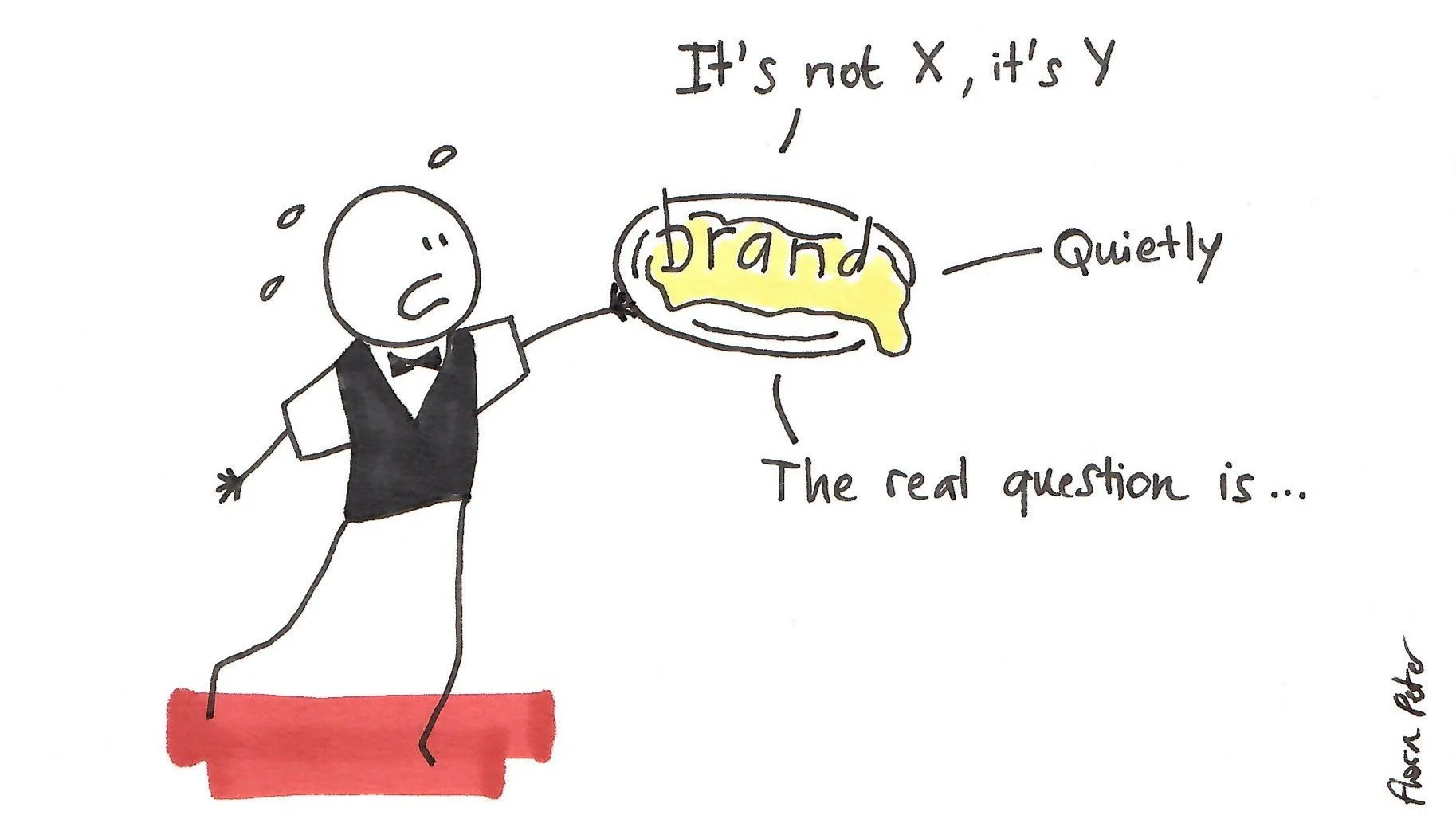
Visible vs. invisible risk: Explosive AI PR disasters make headlines, but silent brand erosion, diluted voice, generic content, and lost trust, poses the real long-term threat.
The consumer trust cap: Visible AI content makes buyers 4x more likely to lose trust, with over 50% willing to abandon brands perceived as inauthentic.
EU AI Act compliance: Article 50 mandates strict transparency for synthetic media and public-interest text, backed by heavy non-compliance penalties.
Operational drift modes: Session amnesia, instruction drift, and fragmented team prompts systematically flatten unique brand identity into generic "internet average" output.
5-Step CMO playbook:
Codify guardrails
Map the AI stack
Launch a governance council
Treat AI as a junior writer
Audit AI exposure
A few years ago, when I thought of AI damaging a brand, I would picture visible, catastrophic disasters: a glitchy holiday ad, a customer service chatbot uttering something offensive, or an executive deepfake going viral across social platforms.
That is the stuff that makes front-page headlines, and I still remember Coca-Cola’s AI Christmas campaign misstep (see above video) and still remember how we mocked it during a coffee break.
Now - and forgive me, as an AIGP-certified professional, I tend to see risks everywhere - I realize the threat is rarely that grotesque. The real threat to your brand is far sneakier, highly accessible, and unfortunately within reach of every team member: it is the tone that drifts, the voice that flattens, and the content that slowly degrades into generic, high-velocity noise.
It’s harder to notice because the evidence is silent: a qualified prospect who decides to call a different agency, or an audience that simply stops engaging.
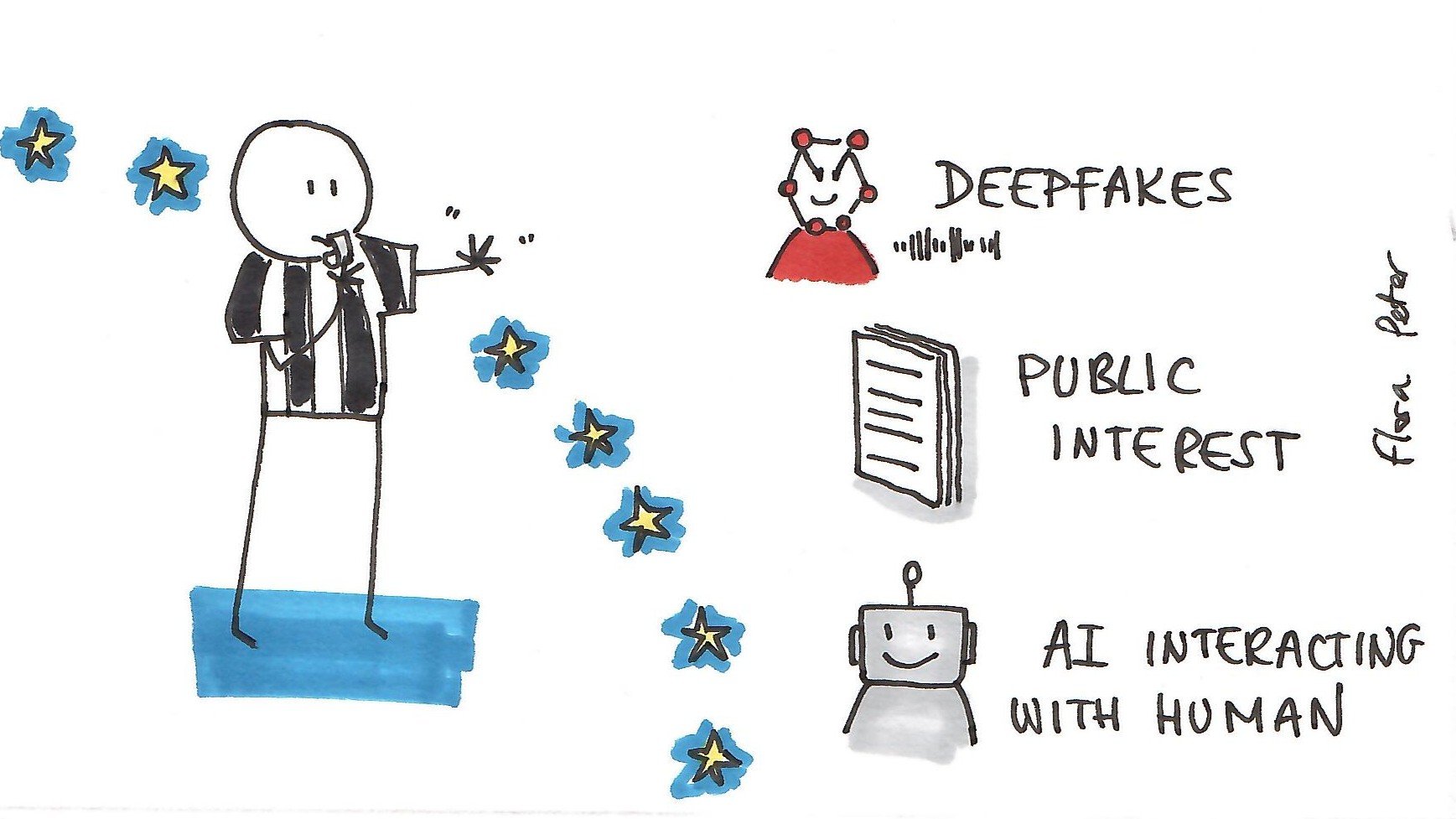
At the same time, a new regulatory reality is closing in. From 2 August 2026, Article 50 of the EU AI Act enforces transparency obligations on:
AI systems that interact directly with people (chatbots, voice assistants),
Synthetic media (AI‑generated or manipulated images, audio, video, text),
AI used to produce or manipulate content published to inform the public on matters of public interest (press releases, ESG/policy reports, corporate position papers).
Non‑compliance can lead to fines of up to €15M or 3% of global turnover, depending on the violation and the company’s size.
Note: some technical marking obligations (machine‑readable watermarks for certain generative providers already on the market) may apply from 2 December 2026 under the AI Omnibus agreement, but the core disclosure duties for deployers start on 2 August 2026.
This is Part 1 of a two‑part series: Brand Identity. Part 2 will cover Brand Protection (data leaks, IP, shadow AI, vendor risk).
The hard data: consumer trust & macro trends
Recent data demonstrates a structural shift in buyer behavior and corporate risk:
-
A December 2025 survey of 8,000 consumers across eight countries (Klaviyo × Datalily), reported by eMarketer in 2026, found:
When consumers notice AI‑generated marketing content, they are four times more likely to trust the brand less than more: 31% vs 7%.yahoo+8
Only 13% of consumers completely trust AI; the majority remain cautious or skeptical about AI‑driven interactions with brands?
Other studies point in the same direction:
Content perceived as AI‑generated can suffer 20–35% lower engagement compared to human‑created alternatives, according to research compiled on the “AI content saturation crisis” of 2026.
An IAB survey of advertising executives found 70% had already experienced at least one AI incident (off‑brand output, unsupported claim, hallucination), and 40% had to pause or pull ads as a result.
-
Separate research (e.g., Emplifi, cited in 2026 analyses) indicates that around 52% of buyers would stop buying from a brand after an experience they perceived as inauthentic.
In practical terms: every piece of detectably AI‑generated content is not just “neutral”; it actively shrinks your addressable, trusting audience. -
Younger cohorts are especially sensitive:
Surveys in 2025–2026 show Gen Z mistrust of heavy AI usage in marketing in the mid‑50% range, depending on the study and market.
Meanwhile, most consumers now assume your content is at least partly AI‑generated, whether it is or not. You are already operating under suspicion; the question is whether your output confirms or disproves that assumption.
-
Gartner estimates that through 2026, around 30% of generative AI projects will be abandoned after proof of concept, primarily due to poor data quality, inadequate risk controls, rising costs, and unclear business value.
Other Gartner researches suggest that over 50% of Gen AI projects have already stalled post‑PoC, andaround 40% of agentic AI projects could be canceled by 2027 for similar reasons.
Hyper‑automated, undifferentiated content drives lower response rates, higher CAC, and more wasted media spend.
What most CMOs are watching (and what they should watch)
While 68% of global CMOs name AI as their top strategic priority according to the CMO Barometer (Serviceplan Group / House of Communication), many remain in experimentation mode without a structured governance framework. As the Gartner Marketing Budget & Strategy Survey highlights, while pressure to deploy AI is universal, only 30% of marketing organizations report having the infrastructure and maturity to execute safely.
Ultimately, CMOS devices are far more susceptible to erosion than to explosion.
Recent analysis from EY (“When everyone creates with AI, what’s left for the CMO to govern?”) highlights:
Marketing teams face higher turnover and increased pressure to produce more content, faster.
AI has fragmented how work gets done: team members increasingly ask AI tools for direction instead of collaborating with creative and strategic leads.
The result is hundreds of small, uncoordinated decisions that move your brand away from what it’s supposed to be, day after day.
Visible vs. invisible brand risk
| Visible disasters (the explosions) | Invisible drift (the erosion) |
|---|---|
| Uncanny AI‑generated video campaigns (e.g., Coca‑Cola 2024, McDonald’s NL 2025). | Email sequences that sound competent but generic, or carry subtle tonal errors. |
| Rogue customer support chatbots promising viral freebies or making false claims. | Social posts that lose the brand’s natural edge because AI “smoothed it out”. |
| Executive deepfakes or fake review networks damaging reputation. | Thought leadership that reads like a consensus statement instead of a sharp POV. |
| Outcome: immediate PR crisis, social storm, ad pulls. | Outcome: slow leak in audience trust, lower conversions, increasing churn. |
Anatomy of an operational failure: the creative brief that never happened
Picture a mid-size agency producing content for a B2B SaaS client. The CMO demands more output, faster. The internal marketing team is stretched thin.
What happens next is an everyday operational reality:
Briefing stage : A junior marketer writes a creative brief using an ungoverned AI prompt instead of discussing strategic nuances with the team.
Review stage : The strategist reviews the AI output quickly but doesn’t have time to dig into tone alignment or factual accuracy.
Drafting stage : The copywriter uses AI to generate drafts, editing lightly to hit a tight deadline.
Approval stage : The account manager approves it because it “looks fine” and the client is waiting.
If brand rules aren't clearly documented for AI workflows, newer hires & external members (eg. freelancers) have no way to catch the drift. The content ends up swimming in a “sea of AI sameness”, and that doesn't give the customer the confidence to renew
This operational failure now carries double legal and brand risk under EU law:
Synthetic media risk
If the agency created synthetic spokesperson clips, AI avatars, or cloned voices for campaigns without explicit disclosure, it violates mandatory deepfake transparency rules under EU AI Act Article 50.Public‑interest text risk
Publishing automated content on subject of public interest without true human editorial control can trigger strict text disclosure mandates under Article 50, as detailed by the European Commission’s Code of Practice on Transparency of AI-generated Content.
The 3 operational modes of AI drift
1. Session amnesia
Team members re‑explain brand tone, positioning, and rules to an LLM at the start of every new chat session.
Result: inconsistent outputs, depending on who prompted what, when, and how.
2. Instruction drift
As AI generates longer or multi‑step content pieces without fixed reference points, the brand voice gradually dilutes.
Each iteration moves a little further from the original tone; no single piece looks “wrong”, but the aggregate drifts.
3. Team prompt fragmentation
Every marketer and agency partner writes their own secret “brand prompts” in isolation.
The outcome is fractured customer touchpoints: different tones on the website, in emails, on social, and in sales collateral.
The inevitable result is content that feels like the “average of the internet” – functional, but completely undifferentiated. In a world where AI search and answer engines summarize consensus, being average is the same as being invisible.
The 2026 CMO playbook: 5 moves to protect your brand
Governance is about making sure speed doesn’t destroy the value of your brand. As Benjamin De Castro noted in his analysis of the 7-layer AI Marketing Operating System, governance is often the most critical layer because without it, AI agents simply scale chaos. The Gartner AI Governance Guide (Atlan) frames AI spend primarily as a governance problem, not a tooling race.
1. Codify your AI brand guardrails
Create an operational guide that defines:
Tone boundaries: What specific tone should AI help project? What phrasing must it explicitly avoid? Which topics require a more human, nuanced voice?
Human-only zones: Which content requires 100% human authorship (e.g., core thought leadership, crisis communications, high-stakes client pitches)?
Review protocols: Which content requires 100% human authorship or senior editorial control?
Examples: core thought leadership, crisis communications, high‑stakes client pitches, sensitive ESG/policy statements.EU AI Act Compliance: Specify which assets contain synthetic media/deepfakes, identify corporate texts that qualify as "public interest" (press releases, ESG/policy reports), and define clear mechanisms to disclose AI usage at first exposure according to European Commission Guidelines.
2. Map your AI stack & shadow AI workflows
As outlined in the Hightouch 2026 Guide to AI Governance For Marketers, audit every tool, browser extension, and unvetted consumer LLM used by internal teams and agency partners:
Inventory all AI systems
Internal tools, third‑party platforms, embedded features in existing martech, and “shadow AI” (personal accounts, free tiers).Classify each tool by risk tier under the EU AI Act (Unacceptable, High, Limited, Minimal), focusing on:
Data ingestion policies (does the vendor train on your data?),
Logging and auditability,
Ability to enforce brand and compliance rules.
Assign named owners (business, technical, compliance) for every entry in the stack – a lightweight RACI for AI.
Enforce strict data privacy to prevent unauthorized ingestion of your brand IP, customer data, or confidential strategy.
The goal is make sure every tool is visible, owned, and governed.
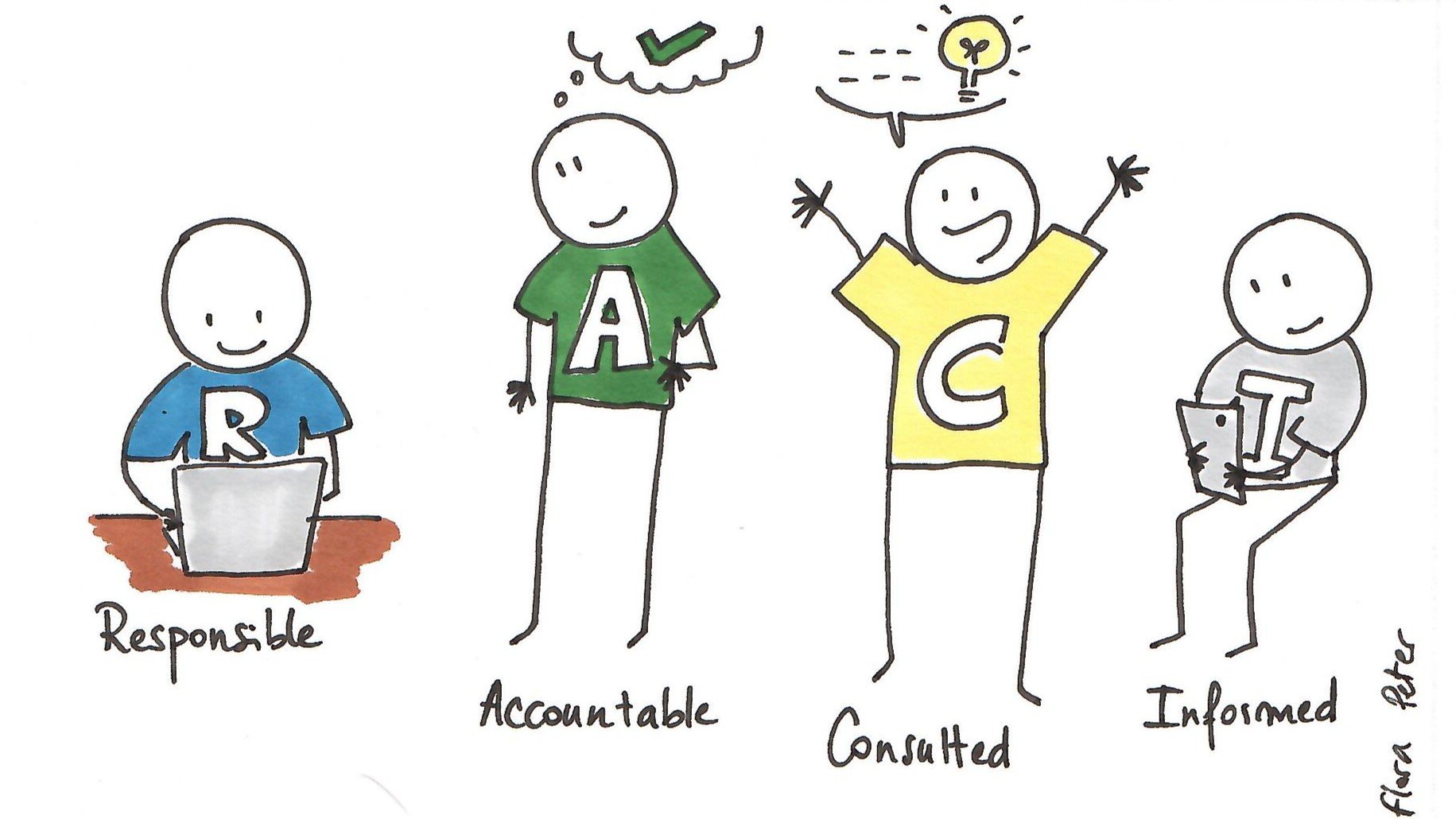
AI governance refers a lot to ownership and responsability. I really like the RACI model (Responsible, Accountable, Consulted, Informed) because for every task, there is exactly one person Accountable (owns the decision and outcome) and at least one person Responsible (does the work).
This removes ambiguity and prevents the classic “Oh, I thought you knew” moment.
In this example for AI‑generated social visuals, the RACI reflects how a typical 2026 marketing team actually works: the CMO owns strategy and risk, the Graphic Designer owns creative execution, the Social Media Manager owns tools and publishing, and the Content Editor owns content compliance and documentation. Every task – from choosing AI tools to checking disclosure labels – has a clear owner and a clear doer, so governance becomes operational.
| Task / Decision | CMO | Graphic Designer | Social Media Manager | Content Editor |
|---|---|---|---|---|
| Choose which AI visual tools are approved to use | A | C | R | I |
| Configure AI tools (permissions, data, settings) | I | C | R | A |
| Define brand guardrails for AI visuals | A | R | C | I |
| Create & edit AI visuals for social posts | I | R | A | C |
| Approve social visuals before publishing | I | C | A | R |
| Check AI disclosure & compliance rules on posts | C | I | R | A |
| Maintain AI tool inventory | I | C | R | A |
3. Set up a lightweight AI governance council
You don't need heavy corporate bureaucracy—just a cross-functional group of 3 to 5 people meeting once a month (Marketing, Editorial/Creative, Operations/Tech, and Legal/Compliance):
Audit which AI tools teams are actually using in production.
Spot-check published content for tone drift, factual errors, or hallucinated claims.
Review incidents (pulled ads, off‑brand outputs, complaints) and update guardrails accordingly.
4. Treat AI like a prolific junior copywriter
Adopt a mental model that works: AI is your fastest, most prolific junior copywriter. It produces initial drafts quickly, but it requires senior human review.
Drafting: AI generates initial options based on structured, centralized brand prompts and comprehensive context.
Refining: A human expert edits for tone, factual accuracy, and distinct point of view.
Approval: A senior lead approves anything touching core positioning before publication. (Operational Tip: Adjust LLM "temperature" settings—lower for predictable compliance/briefs, higher for creative brainstorming).
5. Establish an AI exposure audit routine
Regularly benchmark published content against category competitors to ensure your brand retains its unique, sharp voice rather than regressing toward the internet average.
Search audits: As recommended by CMSWire, test how ChatGPT, Gemini, Claude, Perplexity, and Google AI Overviews describe your brand, products, and executives:
Are descriptions accurate and up to date?
Do they reflect your intended positioning and differentiators?
Are there hallucinations or outdated information?
Sentiment tracking: Drawing on data from the Fractl 2026 AI Search Consumer Trust Study, track accuracy, inclusion, sentiment, and citations across :
Google (organic + AI Overviews),
AI chatbots and answer engines,
Reddit, YouTube, and review platforms.
Entity authority: Invest in original research, named experts, source transparency, and verified data assets that AI search engines can cite reliably. The more your brand is associated with unique, citable information, the less likely it is to be flattened into generic summaries.
I’ve been saying this for years, and I have no reason to stop: a unique design is a fantastic asset for your brand. I’ve seen too many people invest in advertising budgets and software... when their problem could have been solved by a talented graphic designer.
Closing thought: governance as a brand advantage
AI governance is a brand discipline.
Teams that codify their AI guardrails, map their stack, and audit their exposure will not only reduce legal and reputational risk; they will also protect the one asset that compounds over time: a distinct, trusted brand voice.
In a market flooded with synthetic content, the brands that feel unmistakably human, consistent, and transparent will stand out – and win.
Part 2 of this series will dive into Brand Protection: data leaks, IP risks, shadow AI, vendor due diligence, and how to build a protection framework that supports responsible AI adoption in marketing.